
The average U.S. salary serves as a crucial benchmark in both economic and legal analysis. It helps forensic economists establish realistic expectations of what individuals earn across the general population, forming the foundation for economic damage calculations in cases involving personal injury, wrongful death, or employment disputes. Because salaries vary by occupation, education, experience, and region, understanding national wage patterns ensures that every economic loss assessment begins from a credible, data-supported baseline.
Forensic economists use salary data to translate national labor statistics into precise, case-specific estimates of what a person earns or could have earned. By analyzing various factors, they develop projections that reflect real-world earning potential. This article examines the average American salary today, the factors that influence these averages, and how forensic economists use these figures to support credible and defensible economic damage assessments.
What Is the Average U.S. Salary?
As of Q2 in 2025, data from the Bureau of Labor Statistics (BLS) shows that full-time wage and salary workers in the United States had median annual earnings (half of workers earn more, and half earn less) of about $62,192, based on median weekly wages of $1,196.
Why Average Salary Figures Matter in Legal Cases
In litigation involving personal injury, wrongful death, or employment disputes, determining what someone earned, or could have earned, is a central part of assessing damages. Forensic economists and attorneys rely on national wage data to establish that foundation to accomplish the following:
- Establish earning capacity: Provides a baseline for estimating what an individual could earn based on national or regional averages for their occupation and experience level.
- Calculate lost wages: Offers a reference point when employment or tax records are incomplete, disputed, or unavailable.
- Benchmark compensation when direct data is missing: Supports wage estimates for self-employed individuals or workers paid outside of traditional payroll systems.
- Support expert testimony: Strengthens forensic economic opinions by grounding conclusions in verified government data set information.
- Compare with labor market trends: Shows whether claimed or projected earnings are consistent with typical pay in similar roles.
- Ensure fairness in settlement negotiations: Promotes equitable outcomes by relying on objective, standardized wage data.
- Provide context for future projections: Anchors models used to estimate future earnings, incorporating factors such as career progression and work-life expectancy.
- Maintain consistency across cases: Encourages uniform methods between opposing experts, law firms, and insurance evaluators.
By grounding damage calculations in defensible, nationally recognized data, attorneys and experts can present arguments that are transparent, consistent, and credible in any legal setting.
Factors That Influence the Average American Salary
Average salary data tells part of the story, but understanding why those figures vary is equally important, especially in legal and forensic contexts. A person’s earnings depend on a complex mix of variables that extend beyond individual performance or effort. Forensic economists evaluate these and other factors to ensure that wage-loss and earning-capacity estimates accurately reflect a person’s professional reality. Key determinants include:
- Occupation
- Education
- Experience
- Geographic region
- Gender
- Race and ethnicity
- Employment type
- Unionization
Each plays a measurable role in shaping what workers earn and must be considered when translating national statistics into case-specific economic projections. Together, they determine an individual’s earnings potential, which forms the foundation for credible, data-driven economic assessments in legal cases.
Occupation and Industry
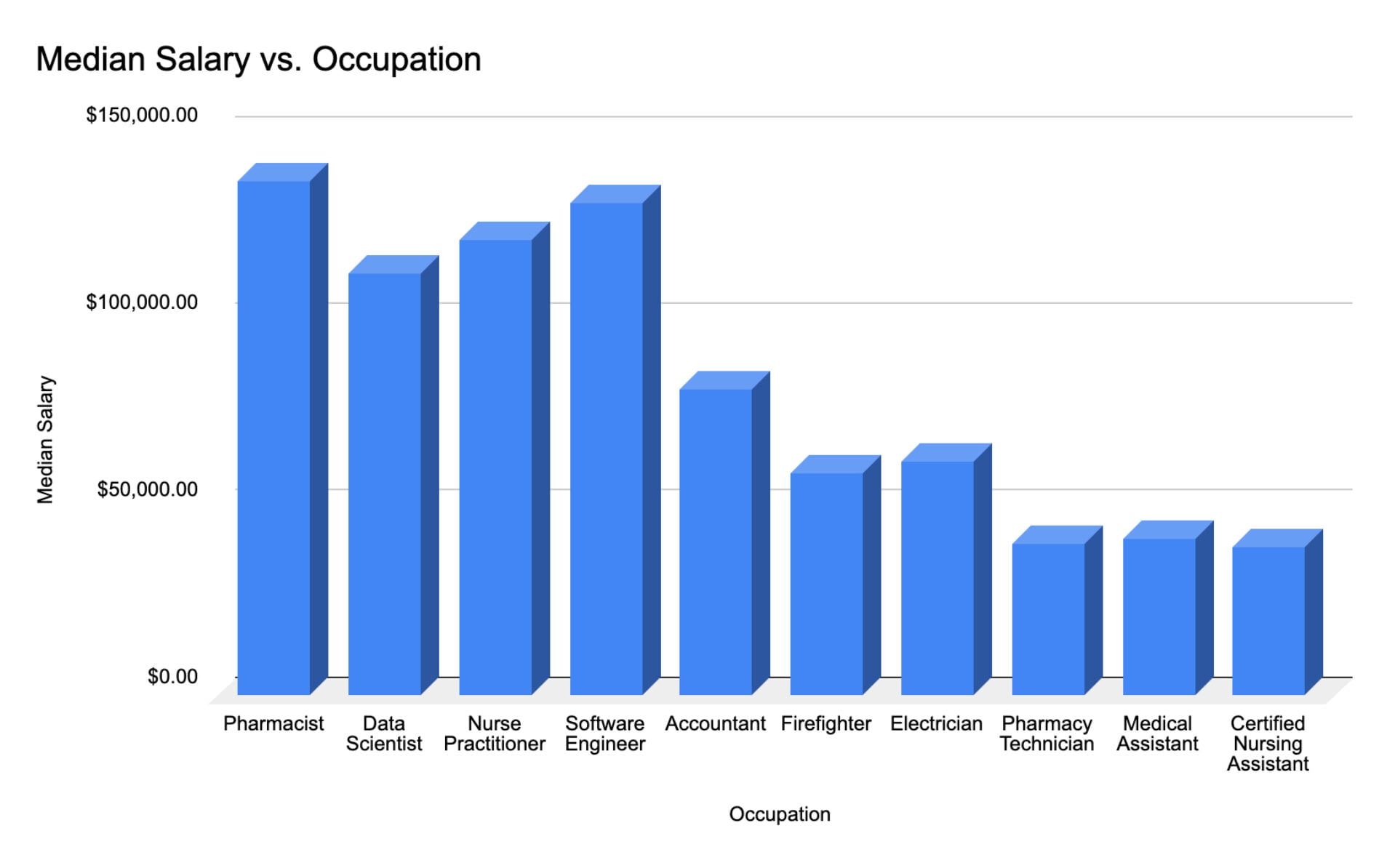
U.S. Bureau of Labor Statistics Occupational Employment and Wage Statistics (OEWS) Program Data
A person’s occupation and the industry in which they work are among the most decisive influences on earnings. The medical field demonstrates this gap clearly. The median salary for pharmacists in 2024 was $137,480 per year, more than double the national median, while median salaries for certified nursing assistants (CNAs) were $39,430 per year — about 37% below the national average. This contrast highlights how education, licensure, and job responsibilities directly affect wages, even within the same industry.
For forensic economists, aligning calculations with the correct occupational and industry benchmarks is essential. Broader labor trends, such as growth in technology, healthcare, or skilled trades, can also shape earning potential over time and must be reflected in any damage assessment. Because occupation- and industry-specific data are available through federal sources, they provide a reliable foundation for building precise and defensible economic loss projections.
Education Level
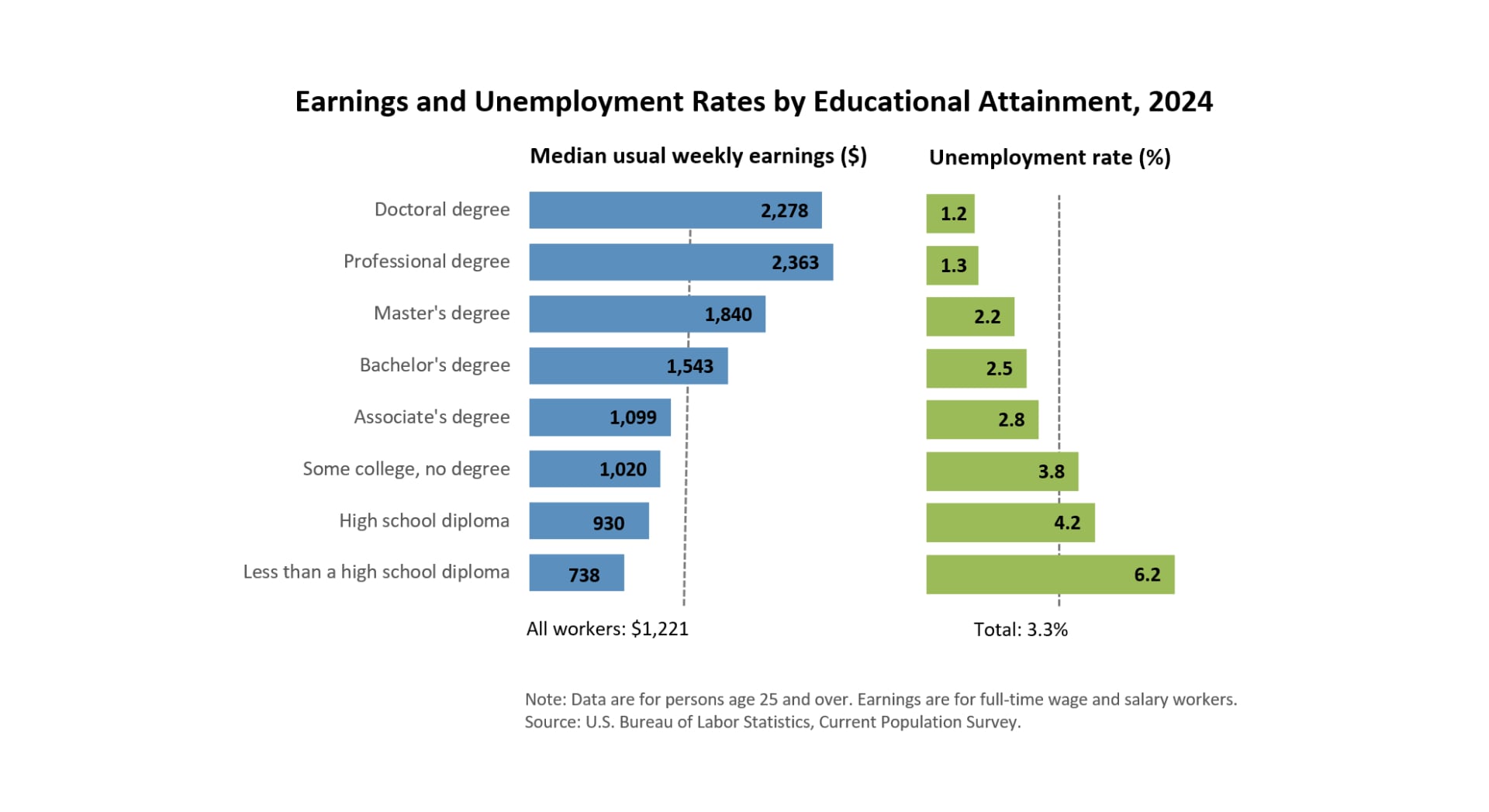 Earnings and Unemployment Rates by Educational Attainment, U.S. Bureau of Labor Statistics, 2024
Education is one of the strongest predictors of earning potential in the United States. According to the BLS, median weekly earnings increase substantially with each level of educational attainment.
In 2024, workers with a bachelor’s degree earned roughly $80,000 per year, while high school graduates earned about $48,000 annually. Earnings fall even further for individuals without a high school diploma, whose median weekly earnings were $738. At the upper end, those holding an advanced degree earned salaries exceeding $95,000 to $120,000 annually.
For forensic economists, these figures are essential. Education level provides an objective benchmark for estimating earning capacity and projecting lost income in legal cases. When analyzing damages, using data aligned with the individual’s actual education ensures that economic estimates accurately reflect their realistic earning trajectory.
Experience and Career Stage
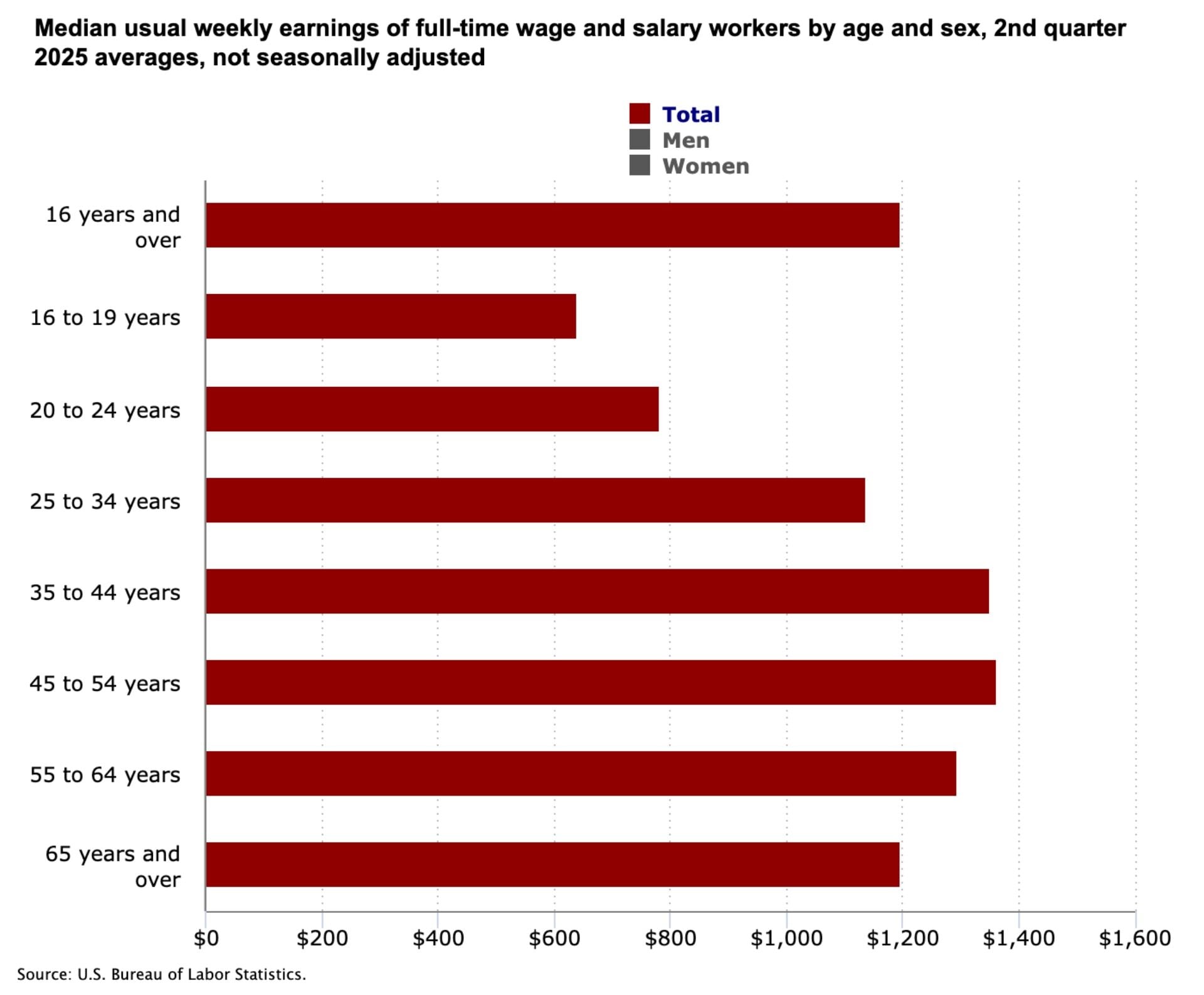
Median Usual Weekly Earnings by Age, 2nd Quarter 2025, U.S. Bureau of Labor Statistics
Earnings generally rise as individuals gain experience and move through mid-career, but that growth often slows as workers approach retirement. According to the Bureau of Labor Statistics, full-time workers in the 35- to 44-year age group earned median weekly earnings of about $1,351, and those in the 45- to 54-year group earned about $1,362 in the second quarter of 2025. These figures represent a steady climb from early-career workers, such as those aged 20 to 24, who earned around $782 per week.
The difference in earnings between younger and mid-career workers illustrates how experience contributes to wage growth through skill development, promotions, and seniority. In later career stages, wages tend to level off, and in some cases may decline slightly, often due to changes in work hours, job responsibilities, or slower nominal wage growth. Even when nominal pay remains stable, real purchasing power can decrease if wages rise more slowly than inflation – a trend reflected in recent BLS data.
For forensic economists, understanding when someone is in their peak earning years is critical when projecting future income. If an individual is in their early career, projections must account for expected wage growth. If they are already near peak earnings or beyond them, projections may shift toward stabilization. Matching the career stage to realistic earnings trajectories ensures that models of lost earnings or diminished capacity are credible and align with accepted labor-market patterns.
Geographic Region
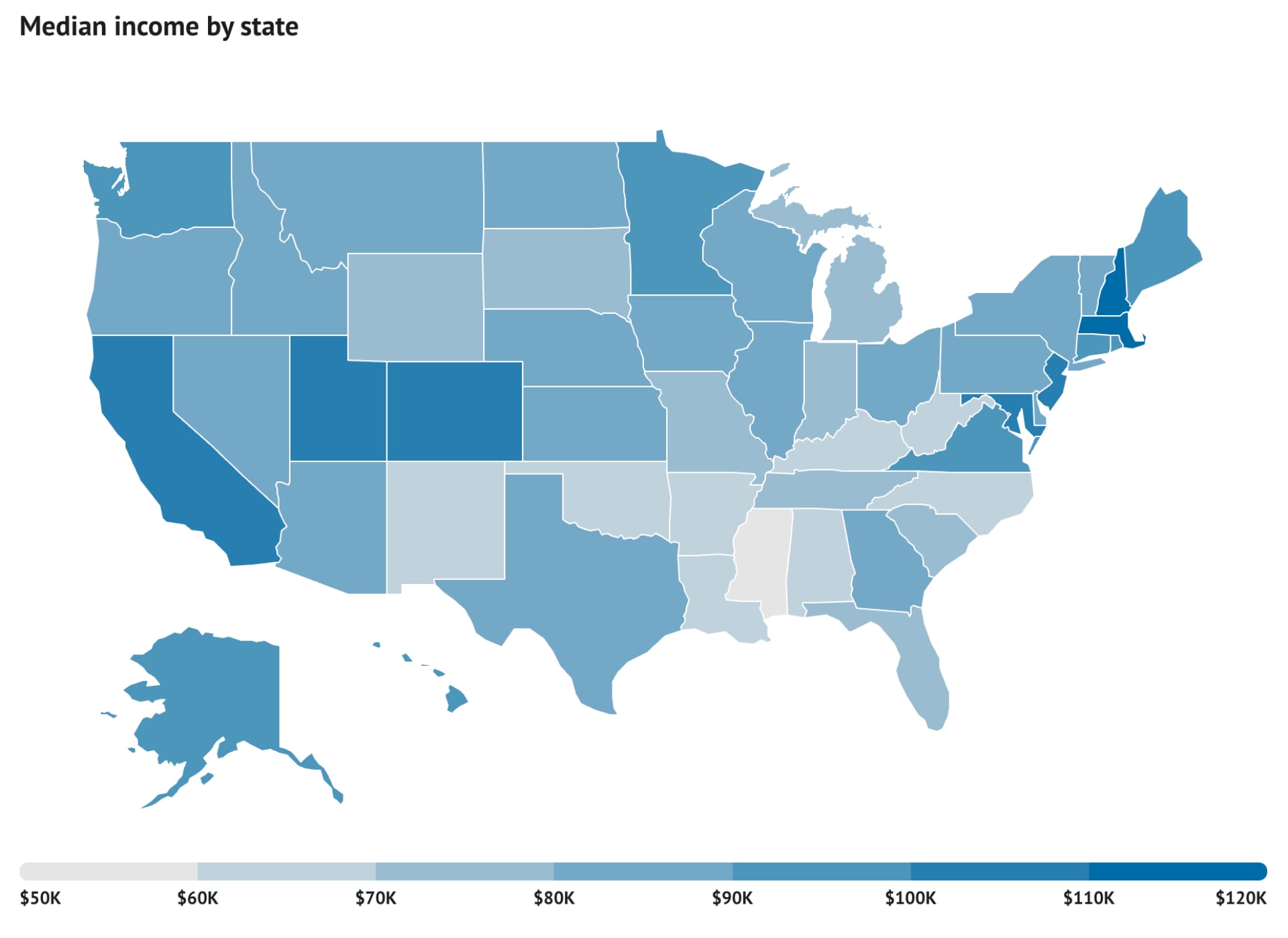
Median Income by State, U.S. Census Bureau, 2025
Across the United States, median household incomes by state vary significantly: states such as New Hampshire ($111,800) and Maryland ($109,700) sit near the highest average, whereas states like Mississippi or Louisiana (around $60,740) lie near the bottom.
Location-specific factors extend beyond state lines. Income levels within metro areas also differ widely, with higher-paying regions like San Jose, Seattle, and Boston exceeding national averages, while smaller or rural metropolitan regions tend to fall below them.
Forensic economists must account for this geographic variation when estimating earning capacity or wage loss. Using a national average for someone working in a lower-income region may lead to overestimating their realistic earnings, and conversely underestimating them if they work in a high-income region. Incorporating state or metro-level income benchmarks ensures that projections reflect local pay norms and cost-of-living conditions, making economic damage assessments more accurate and defensible.
Gender
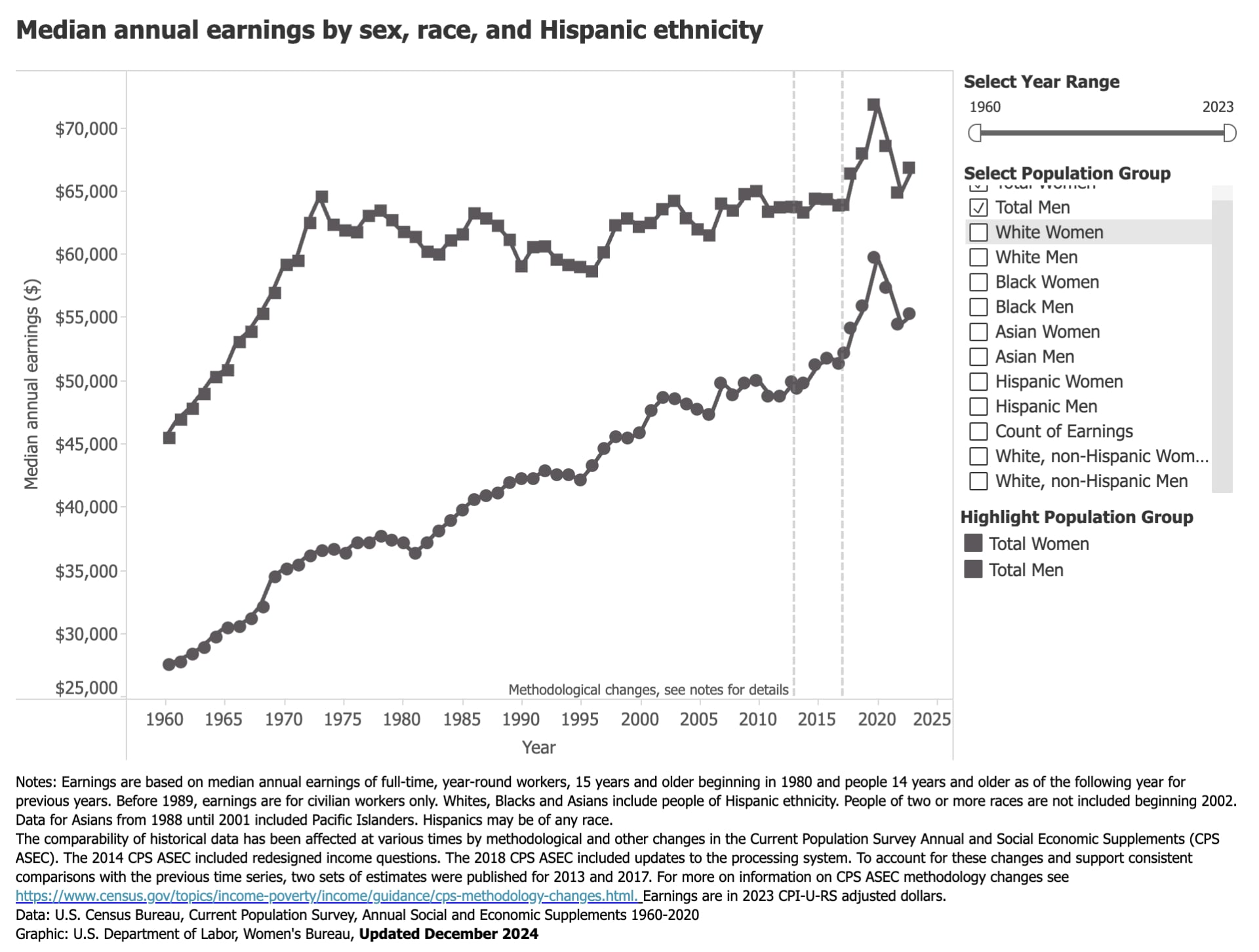
Median Annual Earnings by Sex, U.S. Bureau of Labor Statistics, 1960-2023
Gender is also a measurable factor in U.S. earnings. According to the Census Bureau, men earned a median salary of about $71,090 in 2024, while women’s earnings averaged $57,520, or roughly 81% of men’s pay. Men’s earnings grew 3.8% from 2023 to 2024, compared to 1.5% growth for women.
For forensic economists, understanding gender pay gap patterns is essential when assessing damages. Rather than treating gender as a social or moral issue, the focus is on using accurate, empirically supported data to project what an individual could reasonably expect to earn over time based on established labor market trends.
Race and Ethnicity
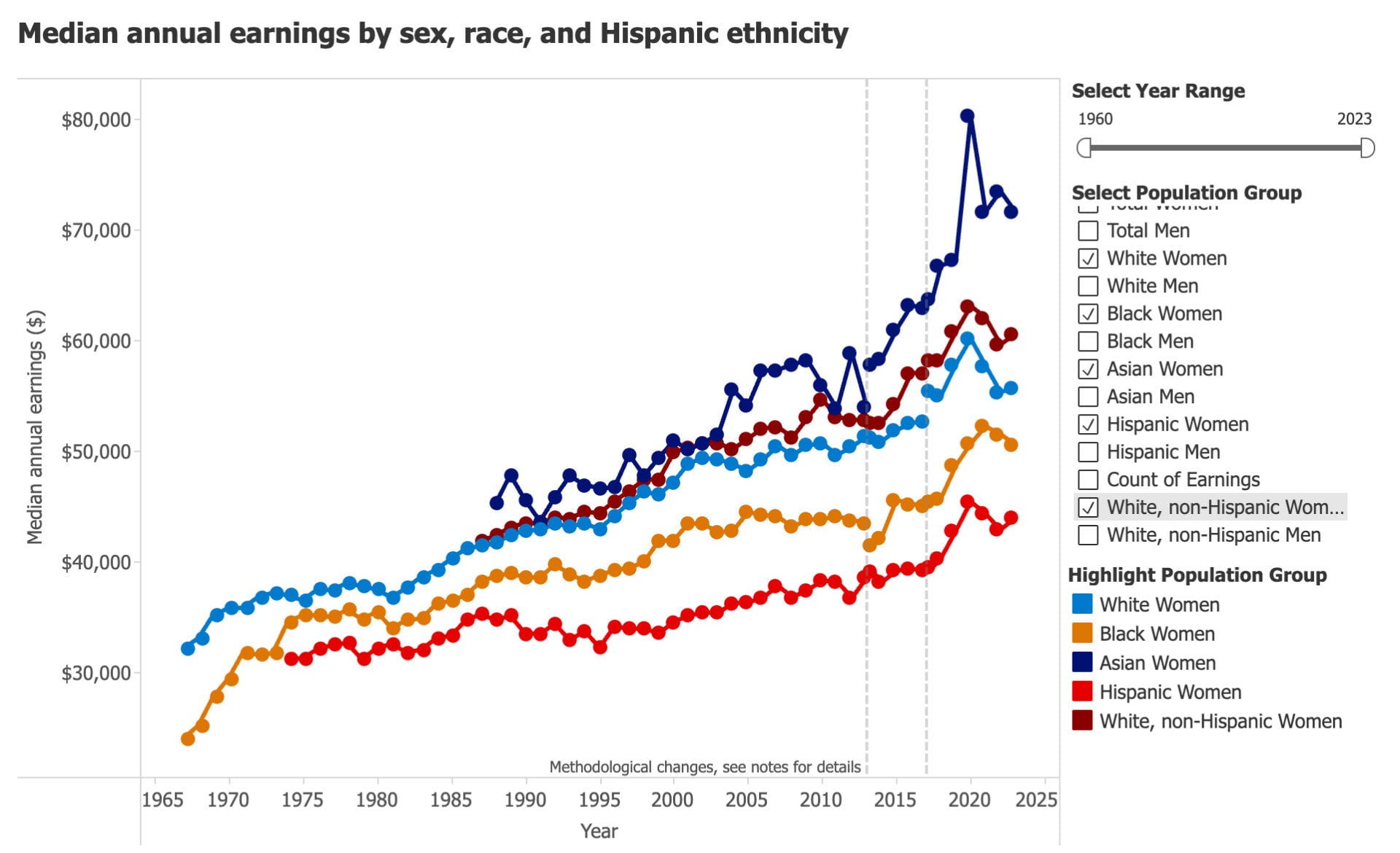
Median Annual Earnings by Race and Sex, U.S. Bureau of Labor Statistics, 1960-2023
Income levels in the United States show measurable variation by race and ethnicity, an aspect that forensic economists must consider when modeling earning capacity or wage loss. According to the U.S. Census Bureau, in 2023, the median household income for households headed by Asian adults stood at approximately $121,700, the highest among major racial groups. Households headed by White (non-Hispanic) adults had a median income of about $88,010, while households headed by Black Americans earned roughly $56,020. Hispanic-headed households had a median of approximately $70,950.
In the context of forensic economic analysis, it is not appropriate to apply a single national average to all claimants. Instead, experts should select benchmark data that aligns with each claimant’s demographic profile, labor market history, and relevant socioeconomic conditions to produce accurate and defensible projections.
Unionization and Benefits
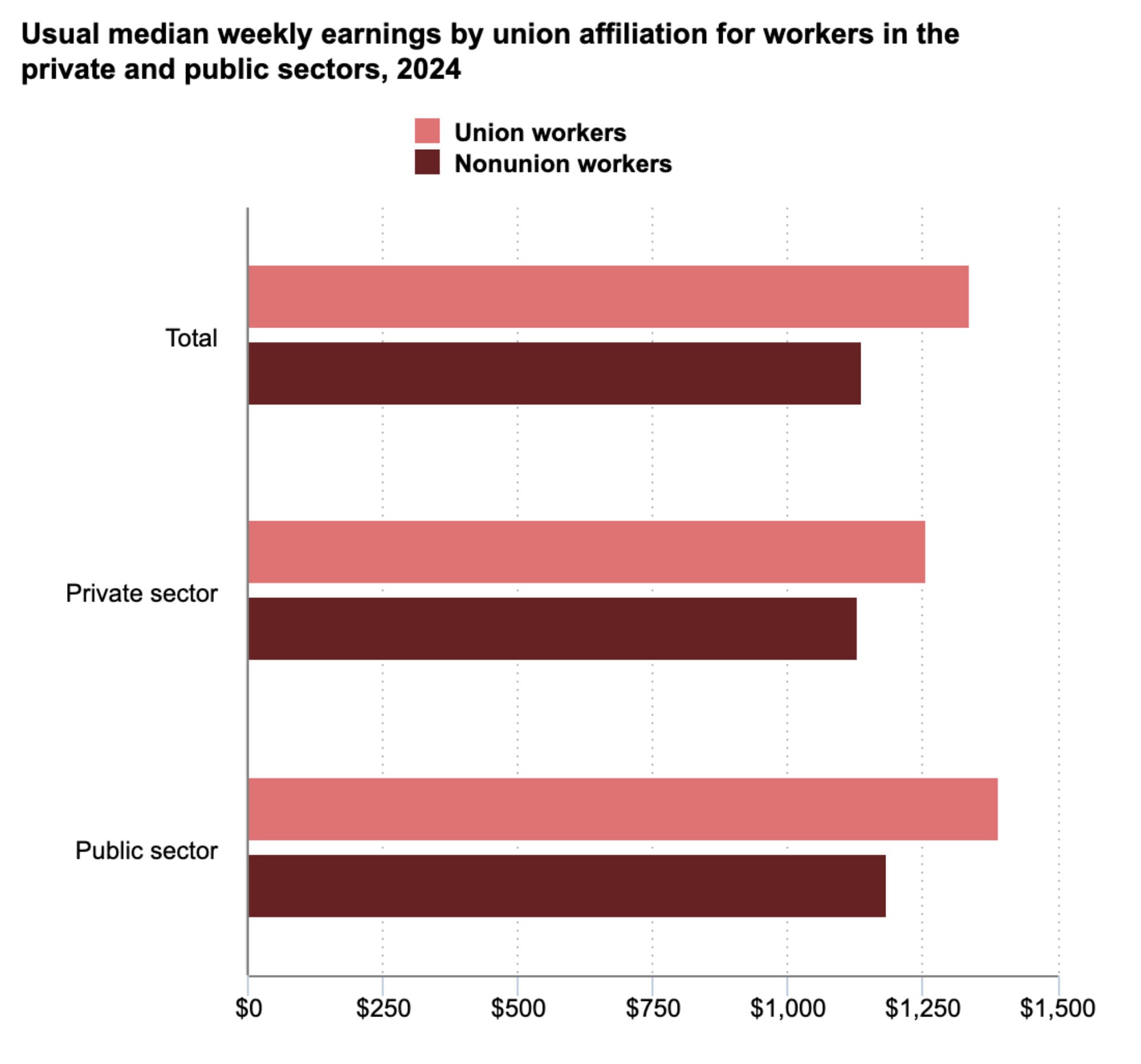
Usual Median Weekly Earnings by Union Affiliation, U.S. Bureau of Labor Statistics, 2024
Employment covered by a collective bargaining agreement can influence overall compensation and wage levels. According to the BLS, full-time wage and salary workers who were union members had median usual weekly earnings of $1,337 in 2024, compared with $1,138 for non-union wage and salary workers, meaning non-union workers earned about 85% of what union workers earned. This figure represents a consistent pattern known as the “union wage premium,” which demonstrates how collective bargaining can elevate average pay across industries.
For forensic economists, union status and benefit coverage must be factored into any projection of wage loss or future earning capacity. If a claimant worked in a unionized role, the baseline wage estimate should reflect the union-level benchmark rather than a general occupational average. Changes in employment status, such as a shift from union to non-union work or variations in benefit coverage, can substantially affect projected income and must be clearly detailed in expert analyses.
How the Average Income Has Changed Over Time in the United States
Over the past four decades, the average income in the United States has increased steadily in nominal terms but far less when adjusted for inflation.
According to the Social Security Administration (SSA), the average annual wage rose from about $15,250 in 1984 to roughly $66,622 in 2023, a more than fourfold nominal increase. Yet this long-term growth does not fully capture real earning power. Data from the BLS show that since January 2021, average hourly earnings have risen 21.8%, while the Consumer Price Index (CPI), a key measure of inflation, has climbed 22.7%. Compared to the previous year, real purchasing power declined slightly, showing how inflation continues to erode wage gains for many workers.
For forensic economists, these trends underscore the importance of distinguishing between nominal and real wage data when projecting income or calculating damages. It is not enough to rely solely on gross pay increases; analysts must adjust for inflation to ensure projections reflect true economic value. Incorporating real-dollar adjustments allows experts to produce credible and defensible models of economic loss that accurately represent what an individual’s income would have achieved in practical purchasing power.
Key Economic Factors That Influence Salaries
Wages in the United States are shaped by a combination of long-term structural and market forces. Forensic economists use data sources such as the current population survey to evaluate these conditions and understand how they affect both past earnings and future earning potential. This survey and similar labor data help identify how changes in workforce participation, job demand, and inflation influence overall wage trends. The following other factors consistently play a major role in determining salary levels and long-term growth:
- Labor supply and demand: Tight labor markets increase competition for workers and drive wages upward, while oversupply in certain fields can suppress earnings.
- Industry trends: Fields such as healthcare, technology, and construction often experience higher wage growth due to specialized skill requirements and ongoing demand.
- Education and skill advancement: Access to education and continuous skill development significantly influence long-term earning capacity across professions.
- Automation and technological change: Advancements in automation and AI can reduce opportunities in some occupations while creating new, higher-paying roles in others.
- Geographic and cost-of-living differences: Salaries tend to be higher in urban centers and high-cost regions but can vary widely depending on local economic conditions.
- Inflation and real wage growth: When inflation outpaces nominal wage gains, purchasing power declines — an essential factor to account for in any long-term economic projection.
These combined influences help forensic economists assess fair and realistic wage trajectories, ensuring that income projections used in legal cases accurately reflect real-world economic conditions.
How Forensic Economists Apply Salary Benchmarks in Legal Cases
Reliable salary data forms the foundation of most economic damage calculations in litigation. Forensic economists use verified information from sources like the Bureau of Labor Statistics and the Census Bureau to estimate what an individual could have earned if not for an injury, job loss, or wrongful death. Experts also account for education, experience, occupation, and regional labor conditions to produce credible, fact-based assessments of lost earnings and future income potential.
Accurate benchmarks ensure that economic projections reflect the financial realities faced by American households. Even modest differences in assumed earnings can compound significantly over time, influencing long-term measures of financial stability and net worth. By grounding their analyses in standardized and transparent data, forensic economists help attorneys and courts reach fair, defensible conclusions about income loss and future earning capacity.
Get Expert Guidance for Accurate Wage and Earnings Analysis
Determining the true value of lost income requires expert economic interpretation grounded in real data. Wage and earnings analyses conducted by forensic economists ensure that legal arguments are supported by accurate, defensible projections based on credible national and regional benchmarks.
These evaluations help attorneys build stronger cases, ensure fair settlements, and eliminate uncertainty when presenting economic damages in court. Sound financial analysis helps clarify the real value of money in terms of lost wages, benefits, and future earning capacity.
If your firm requires a professional assessment of economic damages, The Knowles Group can help. Since 1979, our team of forensic economists has provided expert analysis and testimony for plaintiffs and defendants across North America. Contact us today to schedule a free case consultation and learn how our experience can strengthen your client’s case and support a fair, data-backed resolution.