
When a business suffers economic harm, measuring that loss requires calculating what the business was worth before the harmful event and what it is worth after, or what it would have earned in profits absent the harm. Business valuation is the process of calculating that difference to determine the economic loss. Whether the case involves a breach of contract, shareholder dispute, fraud claim, or business interruption, the calculation determines whether damages are credible or speculative.
This article explains how forensic economists calculate business valuation for litigation purposes. It covers what business valuation is in a legal context, when it is required across case types, the calculation approaches forensic economists use, and the step-by-step income approach process that dominates litigation.
What Is Business Valuation in a Legal Context?
Business valuation in litigation measures economic loss by comparing the value of the business with the alleged harm to what its value would have been without it. A forensic economist performs this analysis by reviewing financial statements, analyzing historical performance, projecting future earnings or value, applying accepted valuation methodologies, and calculating the economic loss. This work produces a damage figure that can be presented and defended in deposition and at trial.
It’s important to note that litigation valuation is separate from transactional valuation, which determines what a pay for a business in an open market transaction. The two serve different purposes: a transactional valuation establishes fair market value for a transaction, while a litigation valuation quantifies damages for a legal case.
When Business Valuation Is Required in Litigation
Business valuation becomes necessary when economic harm to a business must be quantified for litigation. The calculation applies across a wide range of case types, including:
- Breach of contract cases require valuation when a business loses profits due to another party’s failure to perform contractual obligations, comparing what the business would have earned during the damage period absent the breach to actual earnings.
- Business interruption cases involve losses from disasters, supplier failures, or other events that disrupt operations, requiring calculation of lost income during the interruption period and the cost to restore normal operations.
- Shareholder disputes and buyout cases require determining the fair value of a business or ownership interest when shareholders disagree on company value or when one party seeks to force a buyout.
- Partnership dissolution cases require valuation when business partners separate and must divide the assets, determining what the business is worth and how that value should be allocated among the partners.
- Divorce cases require business valuation when a spouse owns a business interest that must be divided as marital property, determining the fair market value of the business or ownership interest.
- Fraud and misrepresentation cases involve businesses whose value has been diminished by fraudulent conduct by owners, partners, employees, or third parties, requiring business value calculations before and after the fraud to determine the loss.
- Tortious interference cases require valuation when a third party interferes with business relationships or contracts, calculating what the business would have earned absent the interference.
- Unfair competition cases involve businesses harmed by anti-competitive conduct, requiring calculation of lost profits or diminished business value resulting from the unfair practices.
- Defamation or reputational harm cases require valuation when false statements damage a business’s reputation and reduce its value or earning capacity, measuring the financial impact of the reputational harm.
- Regulatory action cases involve businesses damaged by government actions such as improper licensing denials, zoning changes, or enforcement actions, requiring calculation of lost profits or diminished value caused by the regulatory harm.
- Environmental contamination cases require valuation when pollution or hazardous materials reduce a business’s ability to operate or diminish property value, quantifying the financial impact of the contamination.
- Construction defect cases involve businesses harmed by building defects that affect operations or property value, requiring calculation of the cost to repair defects and any lost income during repairs.
- Intellectual property infringement cases require determining the value of stolen trade secrets, patent infringement damages, or lost profits from trademark violations.
- Employment-related business harm cases involve losses from key employee departures, violations of non-compete agreements, or theft of customer lists, requiring calculation of the impact on business value or lost profits.
- Estate and gift tax valuation cases require determining business value for tax purposes when ownership transfers through inheritance or gifts.
- Condemnation and eminent domain cases require valuation when government entities take business property, calculating the fair market value of the property and any lost business income during relocation.
How Forensic Economists Calculate Business Valuation
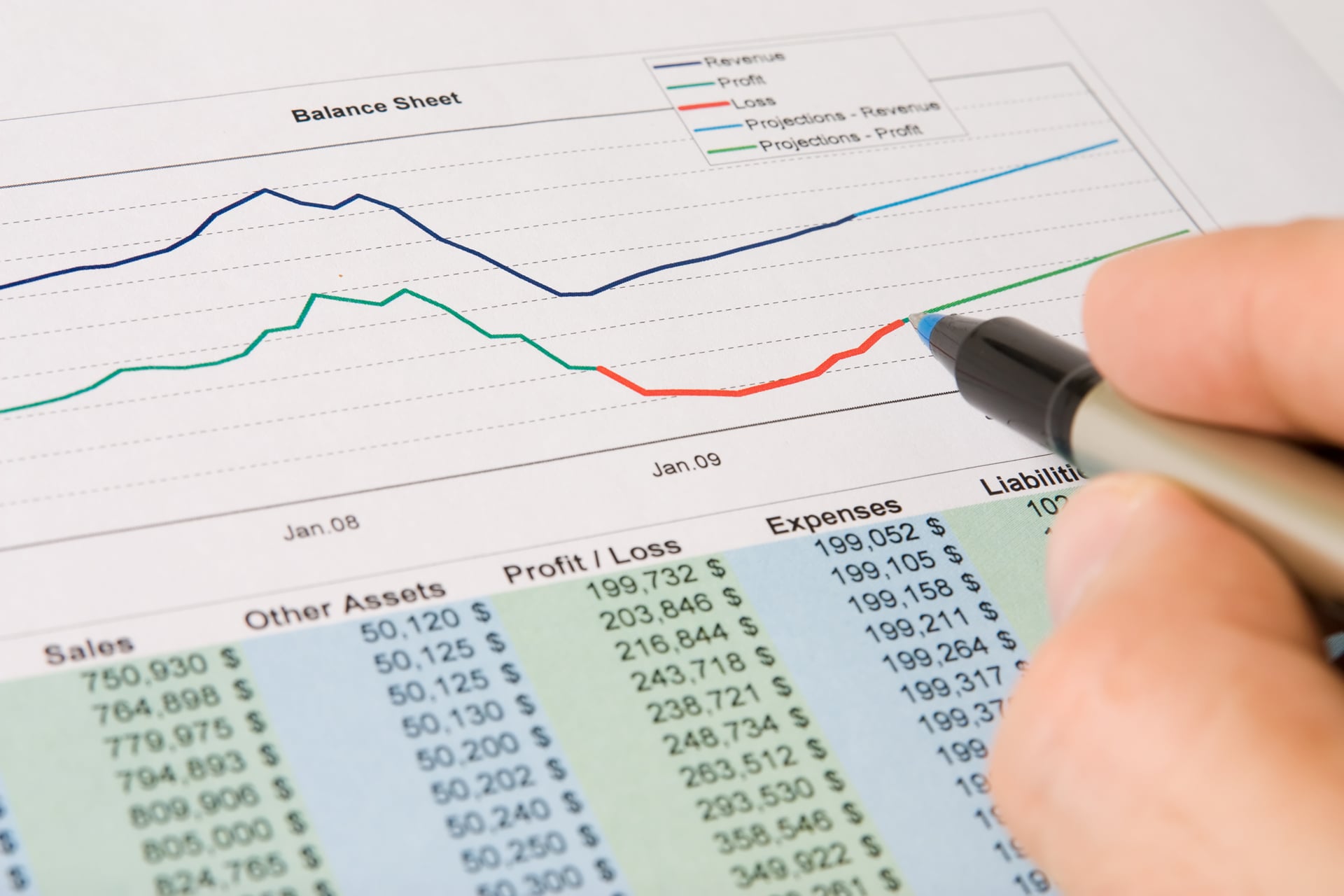
Three valuation approaches exist in business valuation theory. The income approach dominates litigation because it measures economic loss directly by calculating what the business earned or would have earned. The asset-based and market-based approaches exist but are rarely used in litigation contexts.
The Income Approach: The Standard Method in Litigation
The income approach values a business based on its ability to generate future income, discounted to present value. This is the method forensic economists use in the vast majority of litigation cases because it directly measures what the business would have earned versus what it did earn, or what it was worth before harm versus after. The income approach relies on a discounted cash flow model that follows a structured five-step process.
Hypothetical Example
A manufacturing company claims lost profits after a supplier’s breach of contract disrupted production for three years. The company had been generating $2 million in annual revenue with 8% historical growth and operating margins of 30%.
Step 1: Analyze Historical Financial Performance
The forensic economist reviews the business’s financial statements to understand historical performance. Income statements, balance sheets, and cash flow statements show revenue trends, profit margins, expense patterns, and cash flow consistency.
These financial statements require adjustments to reflect sustainable earning capacity, meaning what the business earns from its core operations on an ongoing basis. Common adjustments include:
- One-time events, such as asset sales or insurance proceeds, are removed because they don’t represent what the business earns from its normal business activities.
- Non-operating income, such as investment gains or interest income, is adjusted out because the business’s value depends on what it earns from its actual operations, not from passive investments.
- Owner compensation is adjusted to market-rate salaries because closely held business owners often pay themselves more or less than market rate for tax planning purposes.
These adjustments produce normalized financial statements that reflect core operations rather than results influenced by one-time events or ownership decisions.
Hypothetical Example
The forensic economist reviews three years of financial statements and makes the following adjustments:
- Insurance settlement removed: $150,000 (Year two, one-time event)
- Owner compensation adjusted: From $80,000 to the market rate of $120,000
After normalization, the company’s sustainable annual operating income is $600,000 on $2 million in revenue (30% operating margin).
Step 2: Develop Financial Projections
The forensic economist projects what the business will earn in the future based on its historical performance before the alleged harm. The projection includes several components:
- Revenue projections depend on historical growth rates, whether the market is expanding or contracting, and how the business compares to competitors. A business that grew 10% annually in a growing market will be projected differently than one that grew 10% while the market declined.
- Expense projections distinguish between fixed costs that don’t vary directly with sales volume, like rent and administrative salaries, and variable costs that rise and fall with sales, like materials and commissions.
- Capital expenditures for equipment and facilities are projected based on what the business needs to maintain or expand operations.
- Working capital needs, being the cash tied up in inventory and receivables, are also projected.
This produces projected financial statements showing expected revenues, expenses, and net income for each year in the projection period, typically five to 10 years, depending on the case type.
Hypothetical Example
Based on 8% historical growth, the forensic economist projects what the business would have earned absent the breach:
Year Projected Revenue Operating Margin Projected Operating Income 1 $2.16 million 30% $648,000 2 $2.33 million 30% $700,000 3 $2.52 million 30% $756,000
Step 3: Calculate Free Cash Flow
Free cash flow is the cash available to owners and investors after all operating expenses, taxes, and capital requirements have been paid. It measures what an investor would actually receive from owning the business.
The calculation converts projected net income into actual cash generated:
Free Cash Flow = Operating Income – Taxes + Depreciation & Amortization – Capital Expenditures – Working Capital Changes
Free cash flow eliminates distortions from non-cash charges, financing decisions, and timing differences that affect accounting profit.
Hypothetical Example
For year one, the forensic economist calculates free cash flow:
- Operating income: $648,000
- Taxes (25%): ($162,000)
- Depreciation & amortization: $50,000
- Capital expenditures: ($40,000)
- Working capital changes: ($10,000)
Free cash flow = $648,000 – $162,000 + $50,000 – $40,000 – $10,000 = $486,000
Years two and three produce free cash flows of $525,000 and $567,000, respectively, using the same methodology.
Step 4: Determine the Discount Rate
The discount rate converts future cash flows into present value. Present value is necessary because a dollar received today is worth more than a dollar received years from now because money available today can be invested and grow over time.
A higher discount rate means future cash is worth less today. The rate assigned reflects the risk associated with the business’s projected cash flows. Stable businesses in mature industries have lower discount rates, and volatile businesses have higher discount rates.
Small changes in the discount rate produce large changes in present value, which is why opposing experts often disagree on this input.
Hypothetical Example
Using the build-up method, the forensic economist starts with a 3% risk-free rate, adds a 7% equity risk premium, and adds a 2% small company premium to arrive at a 12% discount rate reflecting the manufacturing company’s size and industry risk.
Step 5: Apply the Discounted Cash Flow Model
The forensic economist discounts each year’s projected free cash flow to present value using the discount rate, then sums those values to determine total business value.
- In lost profits cases, the economist calculates two scenarios: the “but for” scenario showing what the business would have earned absent the harm, and the actual scenario showing what it did earn. The difference is the economic loss.
- In diminished value cases, the economist calculates the business value before the harm and after the harm. The difference is the loss.
Most businesses do not have a fixed end date. They are expected to continue operating indefinitely, which means the forensic economist cannot project cash flows year by year forever. A terminal value is calculated to represent all cash flows beyond the projection period. This assumes the business will continue growing at a steady, sustainable rate indefinitely.
The terminal value is then discounted back to present value and added to the value of the individually projected years. This produces the total business value or total economic loss.
Hypothetical Example
The forensic economist discounts each year’s projected free cash flow to present value using the 12% discount rate.
Year Projected Revenue Operating Income Free Cash Flow Present Value (12% discount) 1 $2.16 million $648,000 $486,000 $434,000 2 $2.33 million $700,000 $525,000 $418,000 3 $2.52 million $756,000 $567,000 $403,000 Total $1,255,000 The total economic loss from the three-year interruption is $1,255,000 in present value terms.
This figure represents what the business would have generated in free cash flow during the damage period, adjusted to reflect the time value of money. The five-step process produces a defensible damage calculation that can be documented in an expert report and presented in testimony.
Asset-Based and Market-Based Approaches
Two other valuation approaches exist in business valuation theory, but are rarely used in litigation.
The Asset-Based Approach
The asset-based approach values a business based on the fair market value of its assets minus its liabilities. This method treats the business as a collection of individual assets rather than as an operating enterprise. It is used when the business is asset-heavy, such as real estate holding companies or equipment rental businesses, or when the business is being liquidated rather than continuing to operate.
The asset-based approach is rarely used in litigation because most damage cases involve operating businesses where value comes from earning capacity rather than physical assets. This approach does not measure the economic loss caused by harm to operations or profitability.
If the asset-based approach were applied to the manufacturing company from the example above, assuming it owns $800,000 in equipment and inventory, it would capture only the liquidation value of those assets, ignoring the fact that the business generates $600,000 in annual operating income. The asset approach cannot measure the lost profits from the supplier’s breach because it does not account for the business’s ability to generate earnings. An example where it could work would be as follows:
Hypothetical Asset-Based Example
A commercial real estate holding company owns three properties valued at $5 million total, with $2 million in outstanding mortgages. The asset-based approach values the company at $3 million (assets minus liabilities). This works because the company’s value comes from the properties themselves, not from ongoing operations.
The Market-Based Approach
The market-based approach values a business by comparing it to similar businesses that have recently sold. This method relies on transaction data from comparable companies to estimate what a buyer would pay for the subject business.
The market-based approach is rarely used in litigation because comparable transaction data for privately held businesses is rarely available. Valuing a small manufacturing company requires finding recent sales of similar businesses in similar markets, which is seldom possible. Public company data exists, but often cannot be meaningfully compared to privately held businesses due to differences in size, access to capital, and market liquidity.
The manufacturing company in the example above operates in a specialized niche with $2 million in annual revenue. No comparable sales data exists for similar businesses in that revenue range and industry. Public company comparables are 10 to 50 times larger and have access to capital markets that private companies do not. Without reliable comparables, the market approach cannot produce a credible valuation for litigation purposes.
When reliable comparables exist, the market approach can provide a useful benchmark, but it is rarely the primary method in damage calculations.
Hypothetical Market-Based Example
A publicly traded manufacturing company with $50 million in annual revenue recently sold for 1.5 times revenue. Under the market approach, a similar company with $10 million in revenue might be valued at $15 million using that same multiple.
How Business Valuation Findings Are Presented

Once business valuation is calculated, the forensic economist produces a written report documenting the methodology, data sources, assumptions, and calculations used to value the business.
The report includes the financial statements, the adjustments made to normalize earnings, the basis for revenue and expense projections, the calculation of the discount rate, and the final valuation or damage amount. Transparency in methodology and documentation is essential because the report will be scrutinized in discovery, deposition, and trial.
Expert witness testimony could follow the report. The forensic economist presents the findings in deposition and at trial, explains the calculation process to judges and juries, and defends the assumptions under cross-examination. The expert responds to opposing counsel’s questions and may critique the opposing expert’s methodology when competing valuations exist.
Contact The Knowles Group for Business Valuation Analysis
Business valuation in litigation requires understanding how courts measure economic loss, which valuation methodologies judges accept, and how to defend assumptions when opposing experts challenge every input. The difference between a credible damage calculation and a speculative one often determines case outcomes. The forensic economist you retain either strengthens your position or creates vulnerabilities that opposing counsel will exploit.
The Knowles Group has calculated business valuations and presented expert testimony in litigation since 1979. Our firm serves both plaintiffs and defendants across the Western United States and Canada in breach of contract cases, shareholder disputes, fraud claims, business interruption matters, and the full range of commercial litigation requiring economic damage analysis. Contact The Knowles Group today for a complimentary case consultation.